Quality management across welding, paint and final inspection stations.

Manufacturing & field proof
We focus on compact and utility platforms that earn their place through hitch geometry, loader durability and dealer-ready parts kits—not slogans. Factory controls and field trials sit beside every major release.
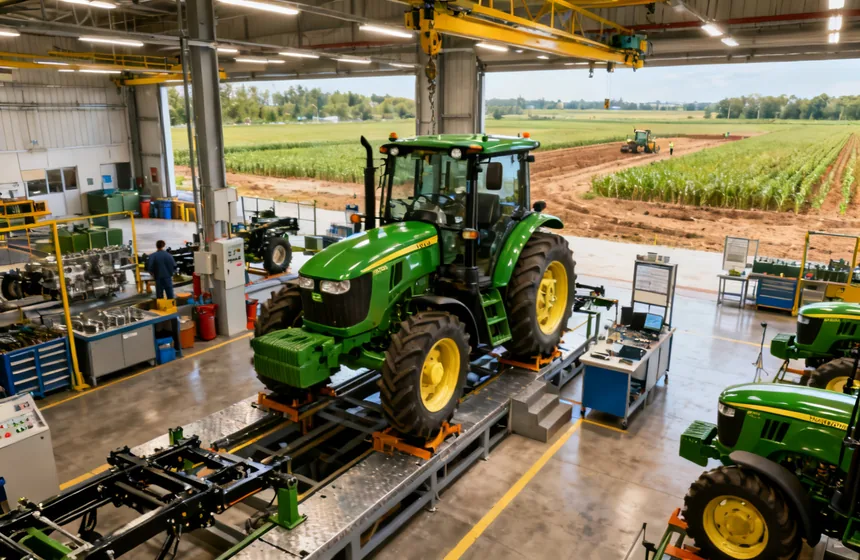
LS Tractor production lines track torque specs, hydraulic leak checks and PTO engagement before a machine is released to dealers. Parallel field plots record rotary tiller depth, loader cycle times and orchard row clearance so model notes reflect working farms instead of showroom staging.
Export documentation packages include ISO 9001 process evidence and CE marking files when markets require them. Growers comparing LS tractor vs Kubota or other utility brands can request the same hitch category, engine power band and parts list format for a cleaner side-by-side review.
On a typical validation pass, engineers log continuous PTO horsepower under load, three-point hitch lift at Category I or II geometry, and hydraulic flow while a front loader completes repeated dump cycles. Those numbers travel with dealer training packets so financing conversations stay tied to measurable work, not brochure adjectives.
Since the 2018 dealer-training refresh, commissioning packets have included a one-page hitch and PTO check sheet that dealers can leave with operators after delivery. In 2022 the field-trial worksheet added working width, soil type and loader cycle timing so dealers could compare orchard, vegetable and pasture demos with the same columns.
What these notes do not claim: a compact platform validated on dry loam will not automatically clear crusted clay at the same tiller depth, and a loader package sized for feed work may still need ballast changes before hillside pasture mowing. Those boundaries stay in the trial packet so financing talks start from measured limits.
Quality management across welding, paint and final inspection stations.
Technical files prepared for European market machinery directives.
Dealer guidance helps farms document equipment hygiene and service logs for audits.
Engine power bands, hitch categories and loader geometry locked against crop and chore profiles from mixed acreage farms.
Hydraulic endurance, PTO horsepower verification and canopy mounting checks completed before pilot shipments.
Seedbed, pasture and livestock yard trials logged with soil type, working width and operator feedback.
Filters, hydraulic fluid recommendations and 3 point hitch wear parts published with dealer inventory codes.
Ask for hitch specs, field trial summaries and the parts kit that travels with your shortlisted tractor.