Crop-to-chore map
Translate planting calendars and livestock routines into weekly tractor tasks that justify horsepower and hitch category.

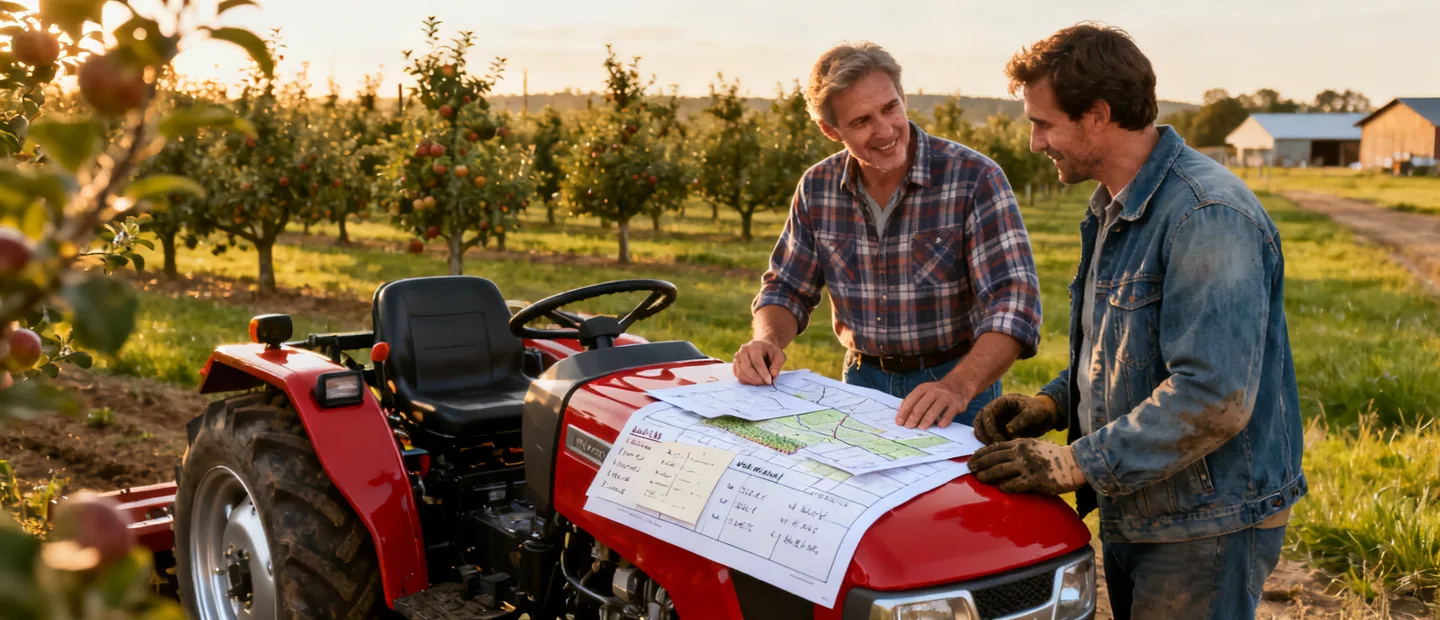
Farm Setup Guide
This guide turns acreage notes, hitch needs and seasonal chores into a dealer-ready shortlist for compact tractors, loaders and tillage tools.
Every step below exists so financing and dealer demos happen after you know which implements, horsepower band and service parts must travel with the machine.
Start with the crop plan: hectares or acres in vegetables, orchard rows, hay pasture or livestock yards. Note gate width, bed spacing and the weeks when a rotary tiller, cultivator or loader cannot sit idle. Only then shortlist continuous PTO horsepower, hitch category and hydraulic flow so LS tractor packages are compared against the same workload sheet.
Guide goals
Translate planting calendars and livestock routines into weekly tractor tasks that justify horsepower and hitch category.
Rank rotary tiller, cultivator, loader, mower or backhoe options against the jobs that cannot wait.
Arrive with parts, warranty, demo and financing questions already written so quotes stay comparable.
Progress tracker
Example planning ranges
Engine power band for mixed chores and light tillage on compact utility platforms.
Three-point hitch category matched to implement weight and working width.
Typical rotary tiller working width for vegetable beds and small seedbed blocks.
Coverage area many growers use when sizing a primary compact tractor for daily chores.
Record continuous PTO output under load, not only advertised engine horsepower.
Parts planning window for filters and hitch wear items before peak season.
Hitch trade-off
Hitch category is a real constraint, not a brochure badge. Choosing wrong usually means either paying for lift capacity you never use or hanging an implement the tractor cannot stabilize at depth.
Fits lighter rotary tillers, cultivators and mowers common on 2–5 ha vegetable or orchard blocks. Lower implement weight keeps ballast simple, but wide or heavy tillage tools may exceed safe lift and stability limits.
Supports heavier implements and wider working widths when seedbed or pasture tools dominate. Requires confirming continuous PTO horsepower, tire ballast and loader removal clearance before assuming every Cat II tool will run cleanly.
Operating boundaries
Planning credentials
Field sizes, soil notes and seasonal hours in one place.
Category, continuous PTO horsepower and hydraulic flow targets.
Filters, hydraulic fluid type and wear pins listed with the quote.
Demo dates, warranty contacts and financing windows side by side.
Share your crop plan notes and we will help route the next conversation to an LS tractor dealer near you.